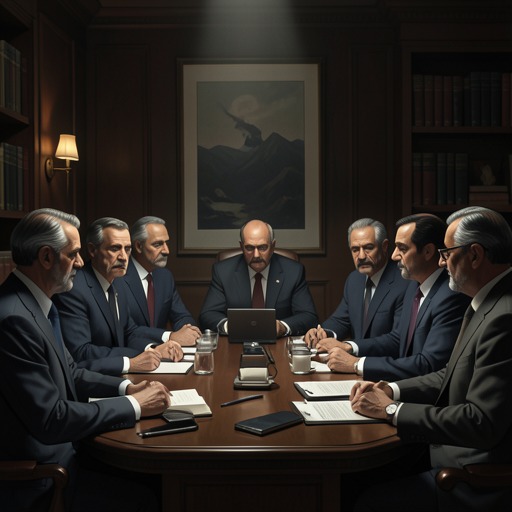
Fred Goodwin
Los pacientes del doctor GarcíaFred Goodwin is the American official who conveys Washington’s recruitment offer to Manuel Arroyo Benítez, including a route out of Argentina, U.S. citizenship, and work for the American team. His brief appearance brings Manuel’s years of intelligence work to a personal decision: rather than exchange one precarious identity for another institutional role, he declines the offer and stays.
The Call from Washington
Goodwin enters Manuel’s story through an urgent telephone message delivered at the school where Manuel teaches. The call comes from Washington, and Goodwin arranges to meet him at eight that evening in a jazz bar on Lavalle Street, a few blocks from the academy. He speaks in a carefully neutral accent, giving Manuel no advance indication of what the meeting will bring. The delay and uncertainty matter: Manuel has waited so long for a decision that he has begun living as though it might never arrive.
The Offer
At the meeting, Goodwin tells Manuel that Washington is deeply impressed by his work and regards it as an achievement, even if Manuel himself may feel it has accomplished nothing. The offer is concrete and generous: the Americans are prepared to get him out of Argentina immediately if necessary, grant him citizenship, and bring him onto their team. Goodwin presents the position as an opportunity to continue applying pressure through official service.
Manuel’s Refusal
Manuel cuts Goodwin off before the pitch is finished. He rises, briefly recovering a sense of strength, though the force carrying him is described as dark and bitter rather than like the hope that once sustained him. He almost says that he would work for the Russians merely to spite the Americans, but swallows the remark. Instead, he tells Goodwin that he is too tired to start over and that, for now, the offer does not interest him. He qualifies his refusal: he will not rule out changing his mind later, and the Americans will know where to find him if they need him.
A Choice of Life
Goodwin’s offer arrives after Manuel’s decisions have already reshaped his life. Manuel had entered the work hoping to escape the tutelage of Kutschmann and the support of SARE; by the time of the meeting, he has built an unforeseen existence in Argentina that feels more authentic to him than either his years in Madrid under the assumed name Adrián Gallardo Ortega or his earlier period in Geneva as Felipe Ballesteros Sánchez. Goodwin can offer safety, citizenship, and another mission, but not a return to the life Manuel had imagined before these choices.
Goodwin is therefore more than the messenger of Washington’s approval. His proposal tests whether recognition and protection can undo the moral and personal costs of Manuel’s past. Manuel declines the new allegiance without closing the door forever, choosing neither a triumphant return nor a clean escape, but the tired, complicated life he has made for himself in Argentina.